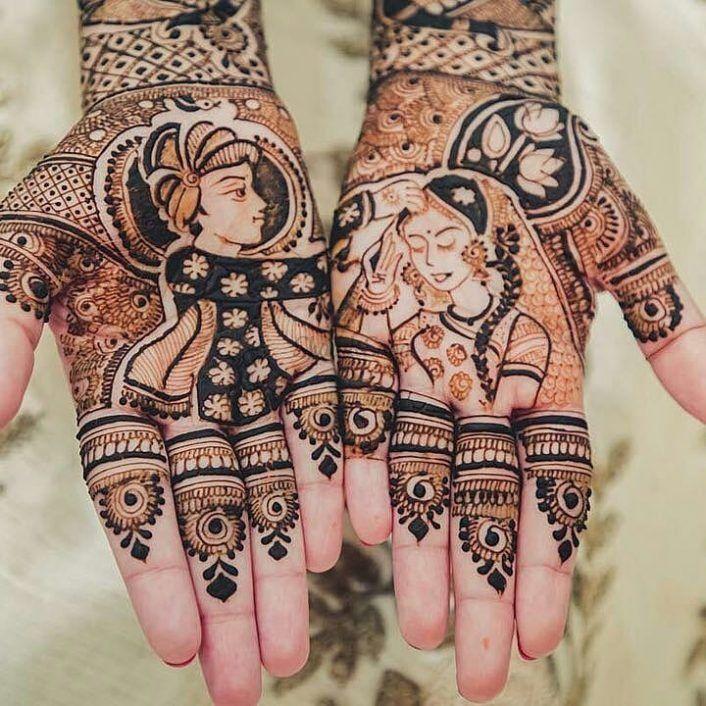

Front Hand Mehndi Designs for Every Bride
Front-hand (palm-side) mehndi gets special attention because it's what shows in ring-exchange photos, hand-clasp shots, and close-up portraits — a strong palm centre motif matters more here than anywhere else on the hand. Here's how to approach this design zone specifically.
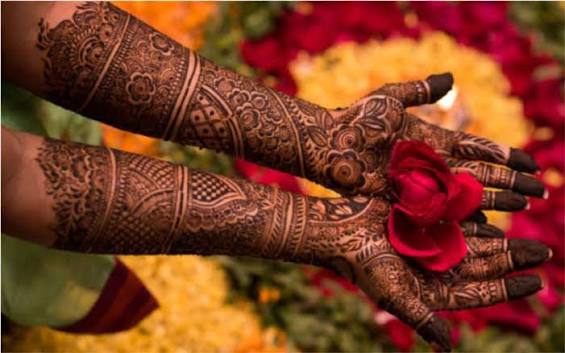
[IMAGE PLACEHOLDER: bridal palm with a detailed centre mandala motif]
Why the Front of the Hand Gets Special Attention
Most wedding photography naturally captures the palm side of the hands — during the ring ceremony, hand-holding shots with the groom, and close-up bridal portraits. That makes the front-hand design arguably the most photographed part of the entire mehndi pattern, even though it often gets less coverage area than the back of the hand.
Popular Front-Hand Motif Categories
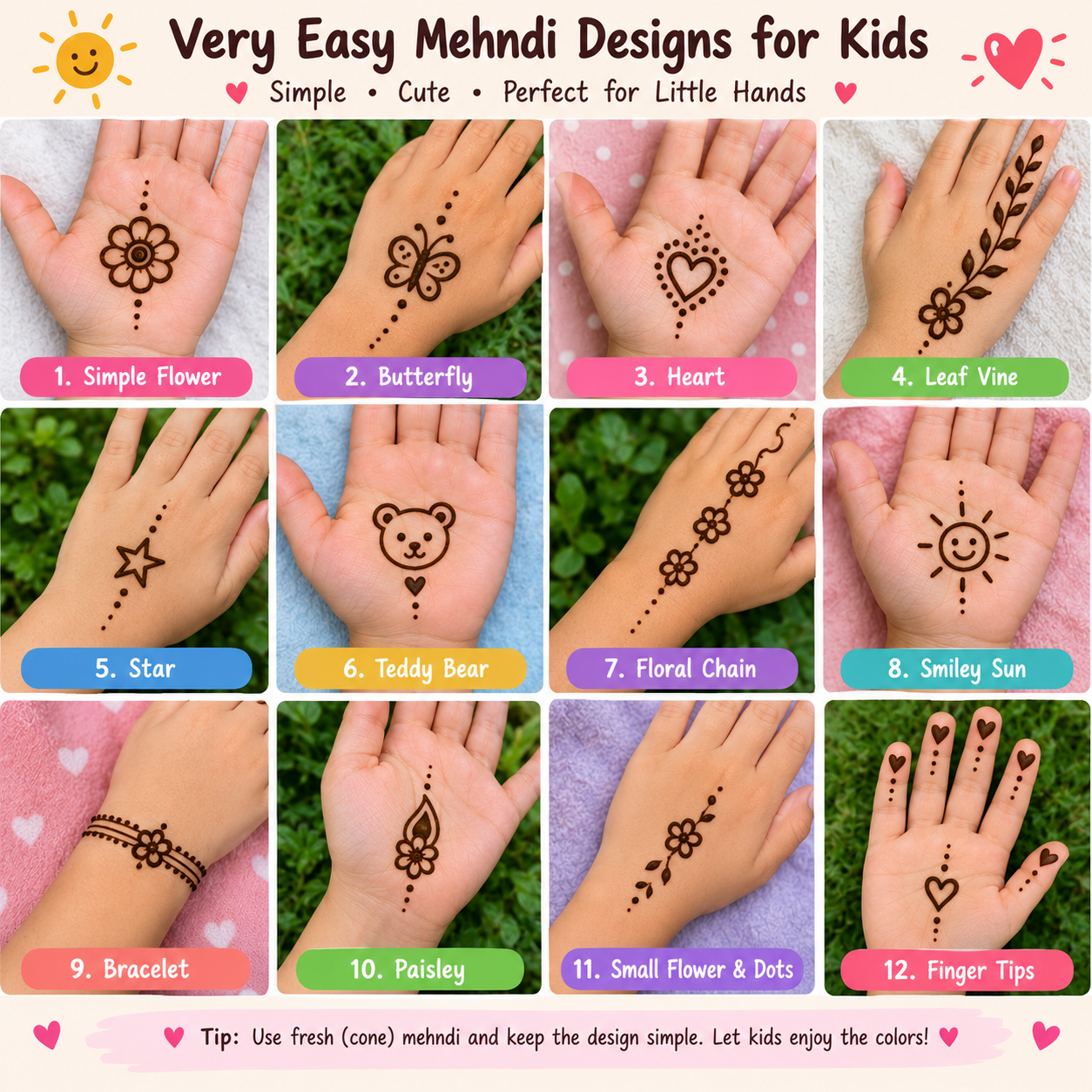
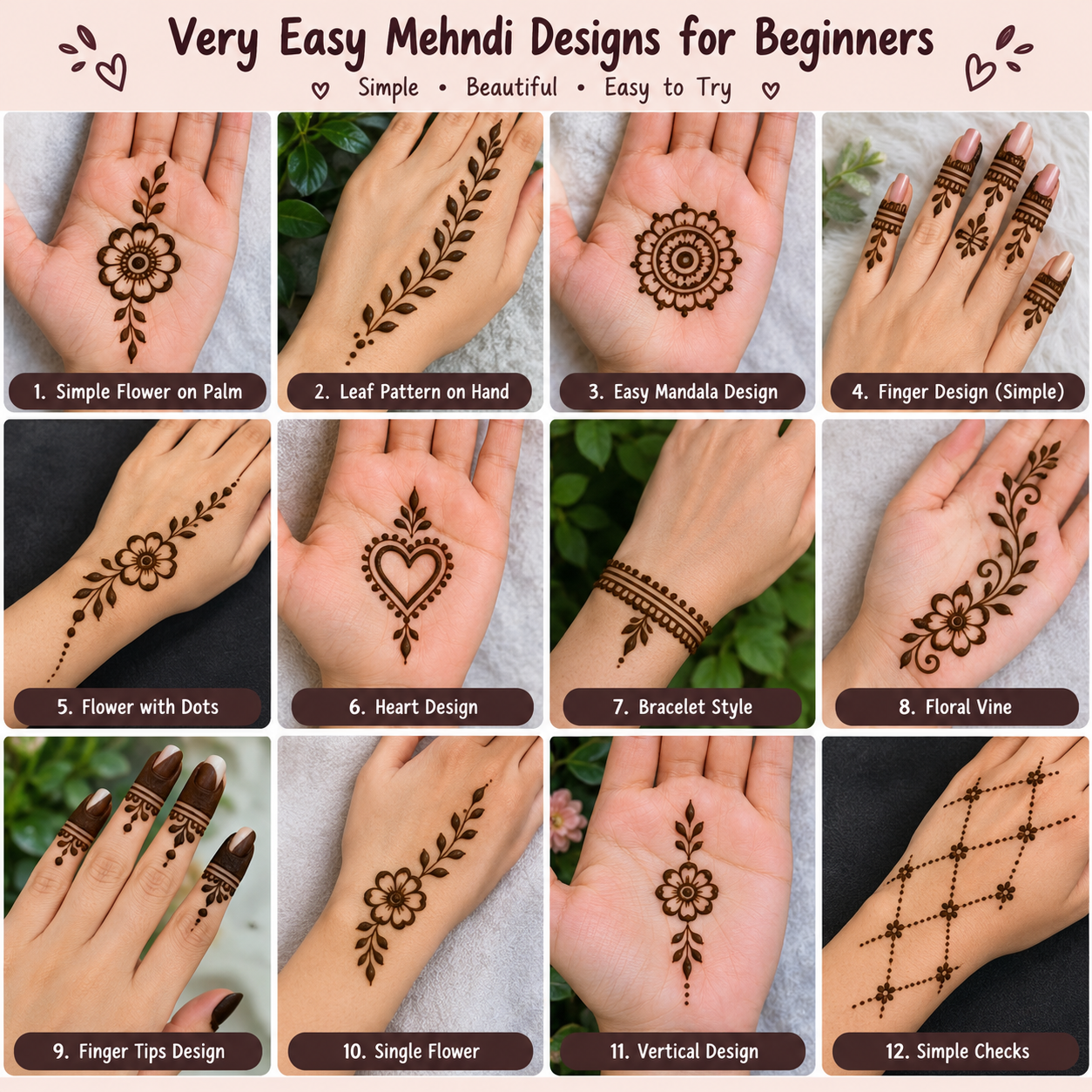
Mandala centrepieces: A circular, symmetrical pattern anchoring the palm centre — the most common front-hand choice for brides.
Floral bursts: A large flower motif radiating outward from the palm centre, often paired with vine trails toward the wrist.
Finger-focused detailing: Intricate patterns concentrated on the fingers, with a comparatively simpler palm.
Full palm fill: Traditional dense coverage across the entire palm, for brides wanting maximum detail.
[IMAGE PLACEHOLDER: floral burst palm motif with vine trails toward the wrist]
Palm Centre vs Full Palm Coverage
A single strong centre motif with open space around it photographs cleanly and suits brides who want a lighter overall hand pattern. Full palm coverage delivers a more traditional, maximalist look but takes considerably longer to apply and can occasionally read as busy in close-up photos where fine detail gets lost.
Pairing With Back-Hand Designs
Many brides design the front and back of the hand as a connected pattern — a vine or border that continues from the wrist across to the fingers on both sides — rather than treating them as entirely separate designs. Discuss this continuity with your artist if you want the two sides to feel like one cohesive pattern rather than two unrelated designs.
Skin Tone and How It Reads in Photos
Henna colour develops differently depending on individual skin tone, and a design that photographs beautifully on one bride can read slightly differently on another simply due to how the stain contrasts against the skin underneath. Rather than judging a reference photo purely on the pattern itself, consider whether the model's skin tone in that photo is close to your own, and ask your artist how the same design tends to look across a range of skin tones based on their own experience.
Photography Considerations
If ring-exchange photos matter to you, make sure your artist knows your ring finger will be a focal point and designs around it thoughtfully, rather than placing a busy motif directly where the ring will sit. Ask to see your artist's previous close-up palm photography to judge how their front-hand work actually reads in photographs, not just in person.
How Front-Hand Style Has Evolved
Front-hand bridal mehndi used to default almost automatically to full palm coverage, treated as one continuous canvas with the back of the hand. That's shifted considerably, with more brides now treating the palm as its own distinct design decision — sometimes deliberately lighter than the back of the hand, sometimes the more elaborate of the two. This flexibility means there's no longer a single "correct" approach; the right choice depends entirely on what you want your hands to communicate in photographs.
Coordinating Front-Hand Design With Your Ring
Beyond simply avoiding the ring finger, some brides ask their artist to design a motif that frames the ring finger deliberately, drawing the eye toward it rather than around it. If your ring itself has an intricate setting, a busier surrounding pattern can compete with it visually; a cleaner surrounding design often lets both the mehndi and the ring read clearly in close-up shots.
Common Mistakes to Avoid
A frequent oversight is finalising the front-hand design without considering how it will look mid-motion — during a ring exchange, hands are rarely held perfectly flat and still. Ask your artist to consider how the pattern reads with slightly curled or angled fingers, not just laid flat on a table during application. Another common mistake is over-detailing the exact centre of the palm where a ring or bangle might partially obscure the pattern anyway; balancing the design slightly around that area rather than directly through it usually photographs better.
What a Trial Session Reveals for Front-Hand Work
A trial specifically for the front of the hand often reveals things a back-hand trial wouldn't — how a motif looks when your hand is held out for a ring, how it reads when your fingers are slightly curled around a bouquet or your partner's hand, and whether the ink settles evenly across your particular skin tone. Since the palm sees more direct, close-up camera attention than almost anywhere else, it's worth treating this trial with the same seriousness as a makeup trial rather than skipping it to save time.
Balancing Detail With Practicality
An extremely fine, delicate front-hand pattern can look beautiful in photos but may also be more prone to smudging during a day full of hand-holding, greeting guests, and general movement. Slightly bolder linework on the palm — thicker than you'd use on the more sheltered back of the hand — tends to survive a full day of activity better while still reading as elegant rather than heavy, which is often the more practical choice for a bride who'll be using her hands constantly on the actual day.
Find Bridal Mehndi Artists on WeddingBuzz
WeddingBuzz features bridal mehndi artists experienced in both palm-centre and full-coverage front-hand styles.
What Different Hand Shapes Mean for Design Choice
A shorter, rounder palm can sometimes get visually overwhelmed by a large, single circular mandala, where a more elongated centre motif — an oval floral shape rather than a perfect circle — often sits more naturally. Longer fingers, meanwhile, give an artist more room to extend fine trailing linework down each finger individually, a detail that gets cramped on shorter fingers. A good mehndi artist will usually suggest adjustments like this without being asked, but it's worth raising if you have a specific reference photo in mind that was designed for a hand shape noticeably different from your own.
Frequently Asked Questions
Why does front-hand mehndi matter so much for brides?
Most wedding photography captures the palm side of the hands, making front-hand design one of the most-photographed parts of the entire mehndi pattern.
Should I choose a mandala or a floral motif for my palm?
Both work well — mandalas suit a symmetrical, formal look, while floral bursts feel softer and more organic. Choose based on your overall design theme.
Should front and back hand designs match?
Many brides prefer a connected pattern across both sides, though it's entirely a style preference — some choose deliberately distinct designs for each side.
Does front-hand mehndi take longer than back-hand?
It varies by design — a full palm fill takes longer than a simple centre motif, similar to how coverage affects timing on the back of the hand.
Working With Your Photographer on This Detail
Since front-hand mehndi matters so much for photography specifically, it's worth a short conversation with your photographer about which shots they're planning to prioritise — a close-up ring shot, a wide hand-clasp frame, or both. Knowing this in advance lets your mehndi artist understand exactly what needs to read clearly at which distance, rather than designing in isolation from how the pattern will actually be captured.
Conclusion
Since the palm side shows up in most of your wedding photos, it's worth giving your artist specific direction on the front-hand design — particularly around the ring finger — rather than leaving it as an afterthought to the back-hand pattern.
Explore bridal mehndi artists on WeddingBuzz: Browse Vendors on WeddingBuzz | Call: +91 73100 30003