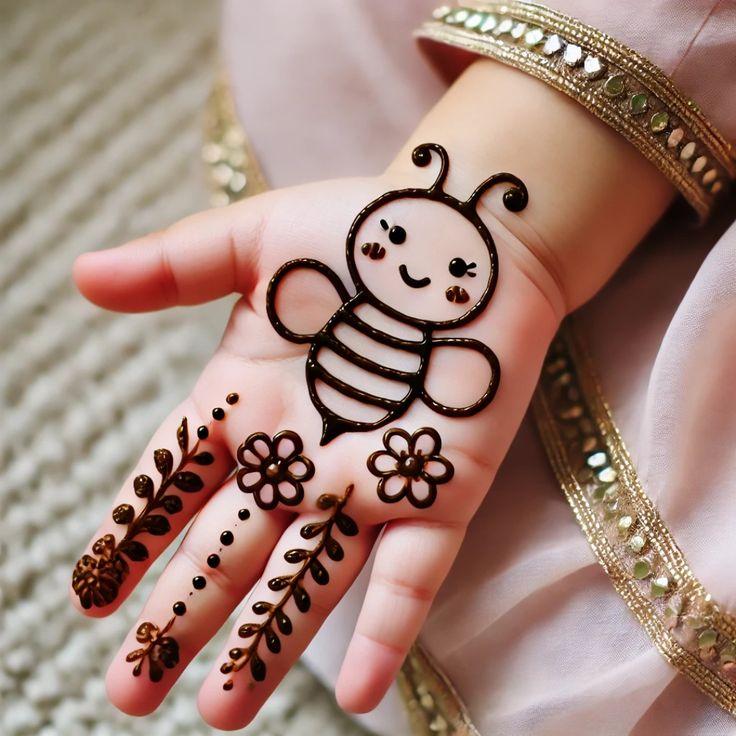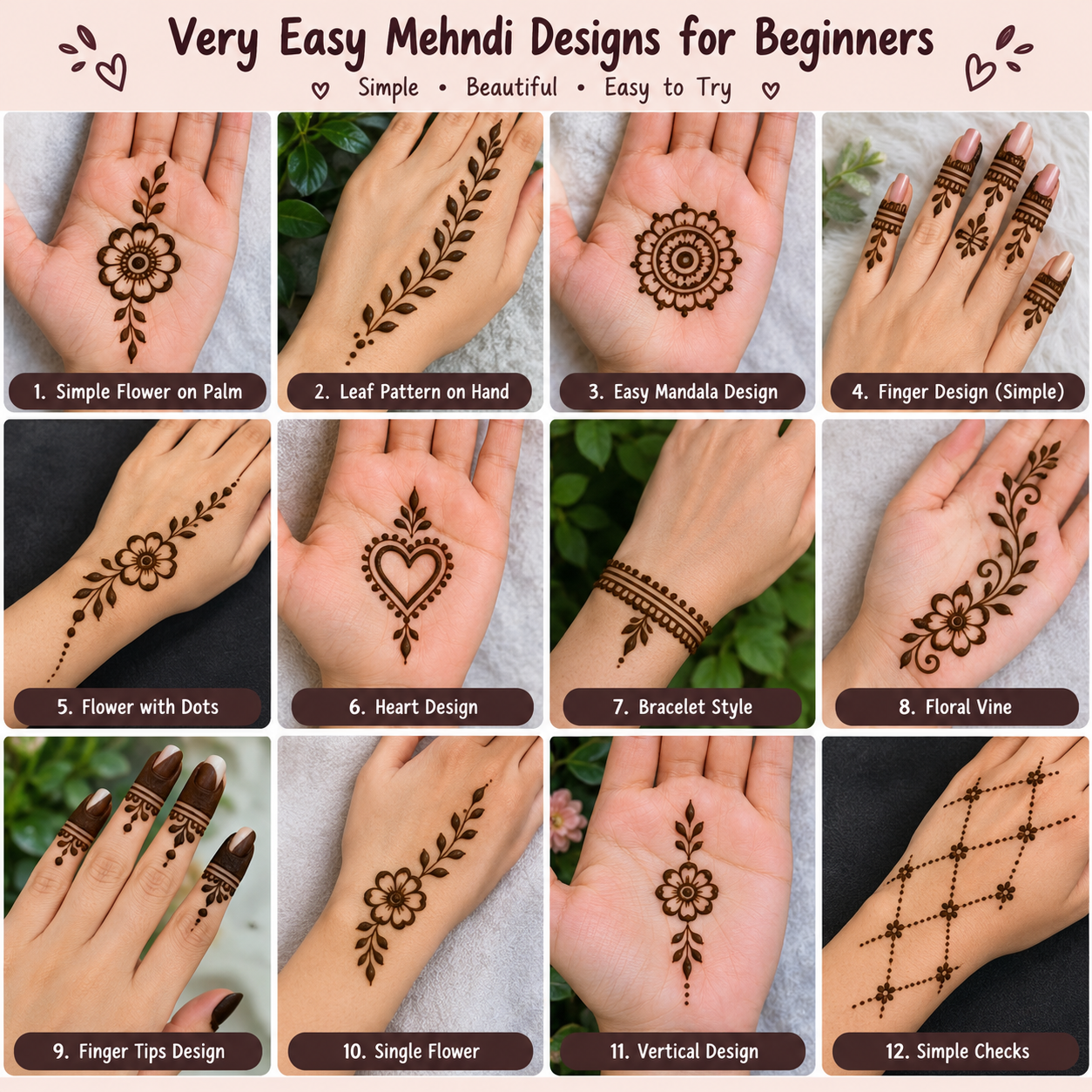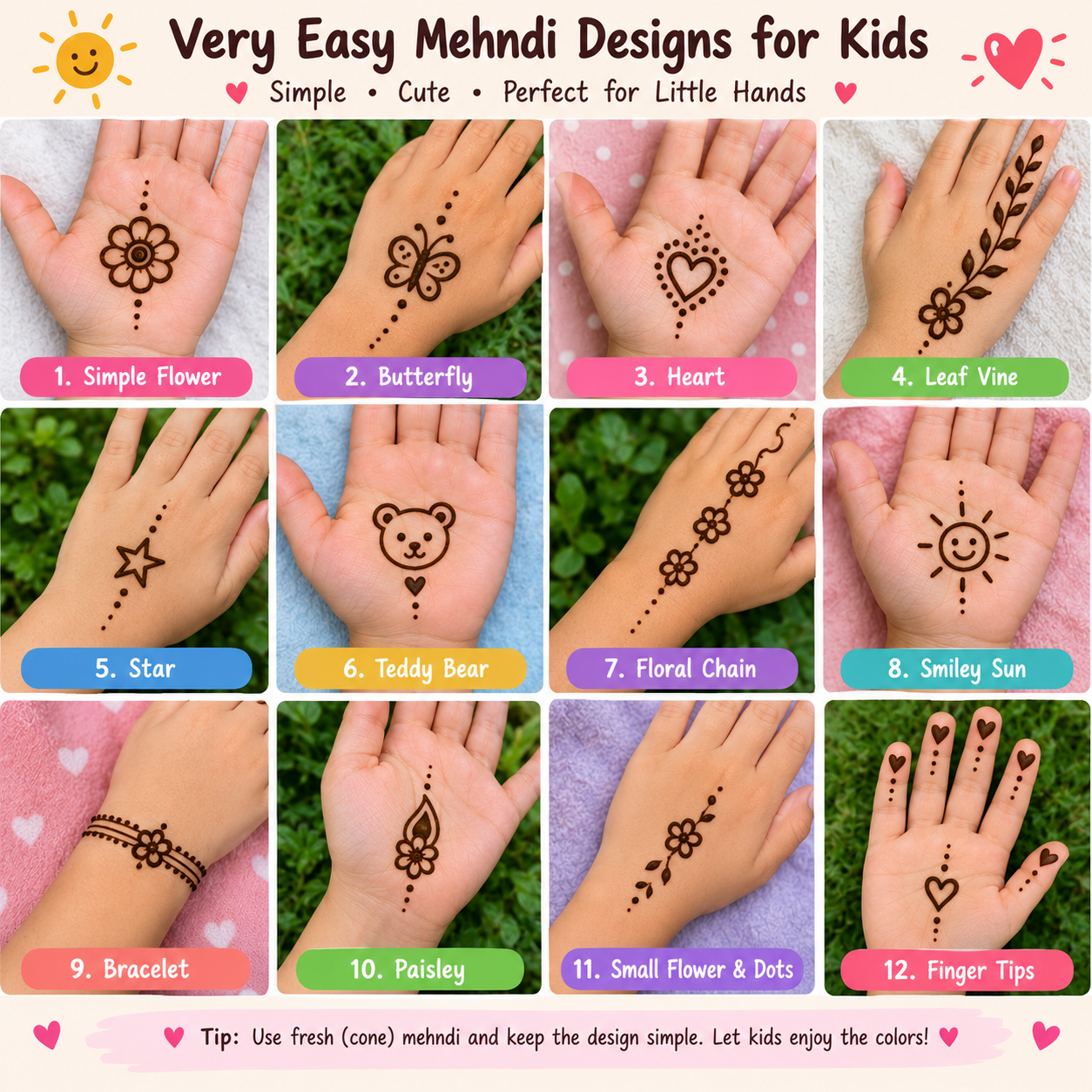

Very Easy Mehndi Designs for Kids
The easiest mehndi design for a child is a single small flower made of five to six dots around one centre dot — no lines, no cone control beyond making dots, and it takes under two minutes even for a parent who's never used a henna cone before. Here's exactly how to do it.
[IMAGE PLACEHOLDER: single dot-flower motif on a child's finger or back of hand]
The One Design Every Parent Can Manage
You don't need any drawing skill for this design — just the ability to squeeze a cone and make reasonably even dots, which almost anyone can do on a first attempt. It's specifically built to be foolproof for a parent applying mehndi to their own child at home, without needing a professional artist or any prior experience.
Step-by-Step for This Exact Design
Choose a spot — the back of the hand or a single finger works best. Avoid the palm, since children touch things constantly with their palms.
Make one dot in the centre of your chosen spot. This is your flower's middle.
Make five or six dots in a small circle around that centre dot. Space them evenly, close enough together that they read as one flower shape rather than scattered dots.
Stop there. Resist adding lines or extra detail — the whole point of this design is that it's genuinely finished after this step.
Let it sit undisturbed for at least twenty to thirty minutes before your child resumes normal play, to give the paste time to set.
[IMAGE PLACEHOLDER: step sequence showing centre dot, then surrounding dots forming a flower]
Why This Particular Design Works So Well for Kids
Dots are the single most forgiving mehndi element that exists — unlike a line, which shows any wobble or hesitation, a slightly uneven dot still reads perfectly well as a dot. This makes the design essentially mistake-proof, which matters enormously when you're working with a moving target like a young child's hand.
Adjusting for Very Young Children
For toddlers or very young children, consider reducing the design to just three dots in a simple triangle, rather than the full six-dot flower — fewer elements mean a shorter application window, which matters more the younger and less patient your child is.
What to Do if Your Child Won't Sit Still
Apply the design to whichever hand isn't currently being used, and let your child keep occupied with the other hand — a toy, a snack, a show — throughout. If even a few dots feels like too much, it's completely fine to do just one or two and call it finished; a partial version of this design still looks like a deliberate small motif rather than an abandoned attempt.
A Note on Using Natural Henna
Always confirm you're using natural, plant-based henna paste rather than dark chemical "black henna" products, which have been linked to skin reactions in some children. A small patch test on the inside of the wrist the day before is a sensible precaution if your child has never had henna applied before.
Alternatives if You'd Rather Not DIY
If applying it yourself feels like more than you want to manage, a professional mehndi artist can apply an equally simple design in the same amount of time, with the added benefit of experience handling children who might be nervous or restless.
Making the Moment Special Without Adding Complexity
Even a two-minute dot design can feel like a genuine event for a child if you make a small ritual of it — letting them choose which hand, sitting somewhere they associate with treats or fun activities, or taking a photo of the finished result to share with grandparents. None of this requires making the design itself more elaborate; the experience around a simple design is what makes it feel special to a child, not the complexity of the pattern.
What This Looks Like a Week Later
Set realistic expectations with your child that the colour will fade gradually over one to two weeks, starting lighter and eventually disappearing entirely with regular hand-washing and play. Framing this as normal and expected, rather than something to be disappointed about, helps a child enjoy the design for what it is during the days it lasts, rather than feeling upset once it starts to fade.
Find Mehndi Artists on WeddingBuzz
WeddingBuzz features mehndi artists experienced with children, for families who'd rather leave even a simple design to a professional.
Doing This Together With Siblings
If you have more than one child, doing simple dot designs for each of them one after another, rather than singling one child out, keeps things fair and gives the others something to look forward to while waiting their turn. It also tends to keep everyone calmer, since a sibling who's already been through the process can reassure a more nervous one that it doesn't hurt and doesn't take long.
Frequently Asked Questions
Can a parent really apply mehndi at home without experience?
Yes, for a genuinely simple dot-based design like this one — it requires no drawing skill, just the ability to make reasonably even dots.
Is this design safe for young children?
Natural henna paste is generally considered safe for most children; just confirm it's plant-based rather than a chemical "black henna" product, and consider a patch test first.
How long does this design actually take?
Under two minutes for the dots themselves, plus twenty to thirty minutes of undisturbed sitting time afterward for the paste to set.
What if my child moves during application?
Because it's just dots, minor movement doesn't ruin the design the way it would a line-based pattern — you can simply continue or stop wherever your child's patience runs out.
Conclusion
A simple dot-flower design proves that "very easy" for kids doesn't need to mean compromised — it's genuinely foolproof, quick, and forgiving of exactly the kind of movement a young child can't help but make.
Prefer a professional touch? Browse Vendors on WeddingBuzz | Call: +91 73100 30003